

Understanding Early Warning Signs of Heart Disease You Should Never Ignore
Understanding Early Warning Signs of Heart Disease You Should Never Ignore


+91- 9837082071
mamteshgupta@yahoo.com
B-27, Near State Bank, Saket, Meerut, Uttar Pradesh - 250001

Understanding Early Warning Signs of Heart Disease You Should Never Ignore

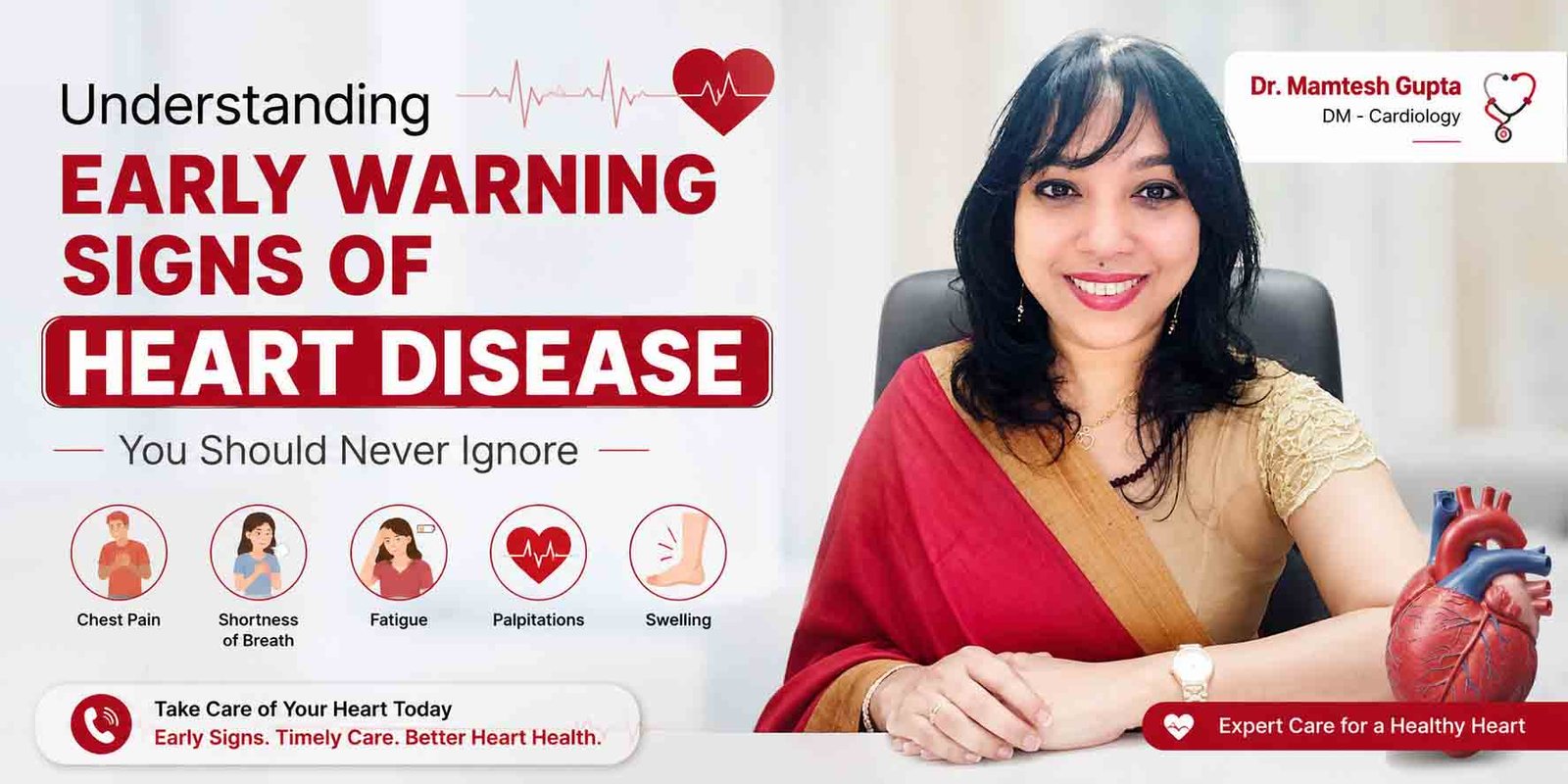
Heart disease remains one of the leading causes of death worldwide, affecting millions of people each year. While many heart conditions develop gradually, the body often provides warning signs long before a serious cardiac event occurs. Recognizing these early symptoms and seeking timely medical attention can significantly reduce the risk of complications and improve long-term heart health.
Dr. Mamtesh Gupta, DM (Cardiology), is dedicated to helping patients identify cardiovascular risks early and receive the appropriate treatment before minor concerns become major health emergencies.
Many people assume that heart disease only affects older adults or those with obvious symptoms. However, cardiovascular problems can develop silently over time. Conditions such as coronary artery disease, hypertension, heart valve disorders, and arrhythmias may progress without causing noticeable discomfort initially.
Early diagnosis allows for:
Chest pain is one of the most recognized symptoms of heart disease. It may feel like:
While not every episode of chest pain indicates a heart problem, persistent or recurring discomfort should never be ignored.
Difficulty breathing during routine activities or while resting can be an early sign of heart disease. When the heart struggles to pump blood efficiently, fluid may accumulate in the lungs, leading to breathlessness.
Seek medical attention if you notice:
Persistent fatigue that cannot be explained by lack of sleep or physical exertion may indicate reduced blood flow caused by underlying heart conditions.
This symptom is particularly common among women and can appear weeks or even months before a major cardiac event.
An irregular heartbeat, racing heart, or fluttering sensation may indicate arrhythmias or other cardiac abnormalities.
Occasional palpitations can be harmless, but frequent episodes should be evaluated by a cardiologist.
Feeling lightheaded, dizzy, or experiencing sudden fainting episodes may occur when the heart cannot maintain adequate blood flow to the brain.
These symptoms should be assessed promptly, especially if accompanied by chest discomfort or shortness of breath.
Fluid retention in the lower limbs can be a sign of heart failure or poor circulation.
Common symptoms include:
Heart-related pain is not always limited to the chest. Discomfort may radiate to:
These symptoms may occur before or during a heart attack and should never be ignored.
Unexpected sweating without physical exertion, especially when accompanied by chest discomfort or nausea, may signal a heart problem.
Cold sweats are often reported during cardiac emergencies.
Certain factors can significantly increase cardiovascular risk:
Individuals with these risk factors should undergo regular cardiac evaluations even if they feel healthy.
You should seek professional cardiac evaluation if you experience:
Early consultation can help identify potential problems before they become life-threatening.
Maintaining a healthy heart requires a proactive approach:
Consume:
Limit:
Aim for at least 30 minutes of moderate exercise on most days of the week.
Regular screenings help detect hidden risk factors early.
Smoking significantly increases the risk of heart attacks and stroke.
Meditation, yoga, adequate sleep, and relaxation techniques support overall cardiovascular health.
Dr. Mamtesh Gupta, DM (Cardiology), provides comprehensive cardiac evaluation, preventive cardiology services, advanced diagnostics, and personalized treatment plans for patients in Meerut and surrounding areas.
With extensive experience, advanced training, and a patient-centered approach, Dr. Gupta is committed to helping individuals achieve better heart health through early detection, accurate diagnosis, and effective treatment strategies.
Heart disease often develops gradually, but the warning signs are frequently present long before serious complications occur. Recognizing symptoms such as chest discomfort, shortness of breath, fatigue, palpitations, and swelling can make a critical difference in outcomes.
Never ignore persistent or unusual symptoms. Early diagnosis and timely medical intervention can help protect your heart and improve your overall quality of life.
If you are experiencing any warning signs of heart disease or wish to assess your cardiovascular health, schedule a consultation with Dr. Mamtesh Gupta and take an important step toward a healthier future.
Book your consultation today and take the next step toward protecting your heart and your life.

12 december 2024
Structural heart disease – an overview
12 September 2024
A Serious Heart Condition Known as SCAD